AI Systems3 min read
Beyond the slot machine: How open-source AI is turning music generation into a real instrument
Why open-source breakthroughs like YuE 2 and symbolic score planning are transforming AI music from a random prompt-to-song lottery into a precision creative instrument.
For the past two years, generating music with AI has felt like equal parts pure magic and high-stakes gambling. You type a prompt like '90s trip-hop with lush Rhodes chords and moody female vocals' into a cloud tool, hit generate, and thirty seconds later you have a polished three-minute track.
The first few times you hear it, your jaw drops. But as soon as you try to use it for real creative work—scoring a video, crafting soundscapes for an app, or producing an actual song—you slam headfirst into an infuriating wall: the AI music slot machine.
The frustration of the prompt-and-pray lottery
Every creator who has experimented with tools like Suno or Udio knows the exact frustration: the verse is hypnotic, the vocal delivery gives you chills, but then the chorus lands on an awkward chord that ruins the entire emotional buildup.
In the closed-source cloud paradigm, you have zero surgical recourse. You cannot reach inside the mix to nudge a single MIDI note, rewrite the bassline, or fix a weirdly slurred syllable. Your only option is to pull the slot machine lever again, burn through more subscription credits, and pray the black box gets lucky on round thirty. It is fun for five minutes, but maddening as a creative tool.
The breakthrough: Teaching AI to think in musical scores
This is why the recent open-source release of YuE 2 (developed by the Multimodal Art Projection collective) genuinely stopped me in my tracks. It represents a fundamental architectural leap in how artificial intelligence approaches sound.
Instead of treating music generation as a brute-force statistical guess that predicts raw audio waveforms straight out of text tokens, YuE 2 introduces symbolic planning. Before rendering a single millisecond of 48 kHz stereo audio, the model first writes an explicit, readable musical score—mapping melody lines, chord progressions, tempo, and lyrical cadence in human-readable notation.
By splitting compositional intent away from acoustic rendering, the entire game changes:
- Interactive Harmonic Control: You can inspect and tweak the chord progression before sound is ever generated. Want to flip a joyous pop progression into a moody, melancholy minor key? You edit the symbolic blueprint directly rather than hoping a text prompt understands emotional nuance.
- Chameleon Genre Transposition: You can take an iconic theme—whether it is a classical Beethoven motif or a vintage jazz riff—and transplant it effortlessly into Spanish flamenco, upbeat boogie-woogie, folktronica, or gritty emo rock while keeping the core melody intact.
- Agentic Iterative Editing: Instead of an all-or-nothing re-roll, you can instruct an AI agent to re-harmonize only the chorus or tighten the drum pocket on the bridge while keeping the rest of the performance untouched.
Local sovereignty and modular node power
Beyond the architectural elegance, there is something deeply empowering about running these models locally on your own GPU through visual node environments like ComfyUI. The dynamic shifts entirely in favor of the creator:
- Zero Credit Meters: You are never constrained by monthly API quotas or token micro-transactions. You can generate fifty variations overnight while you sleep.
- Total Privacy & Zero Censorship: No corporate moderation bots misinterpreting harmless lyrics or blocking experimental songwriting.
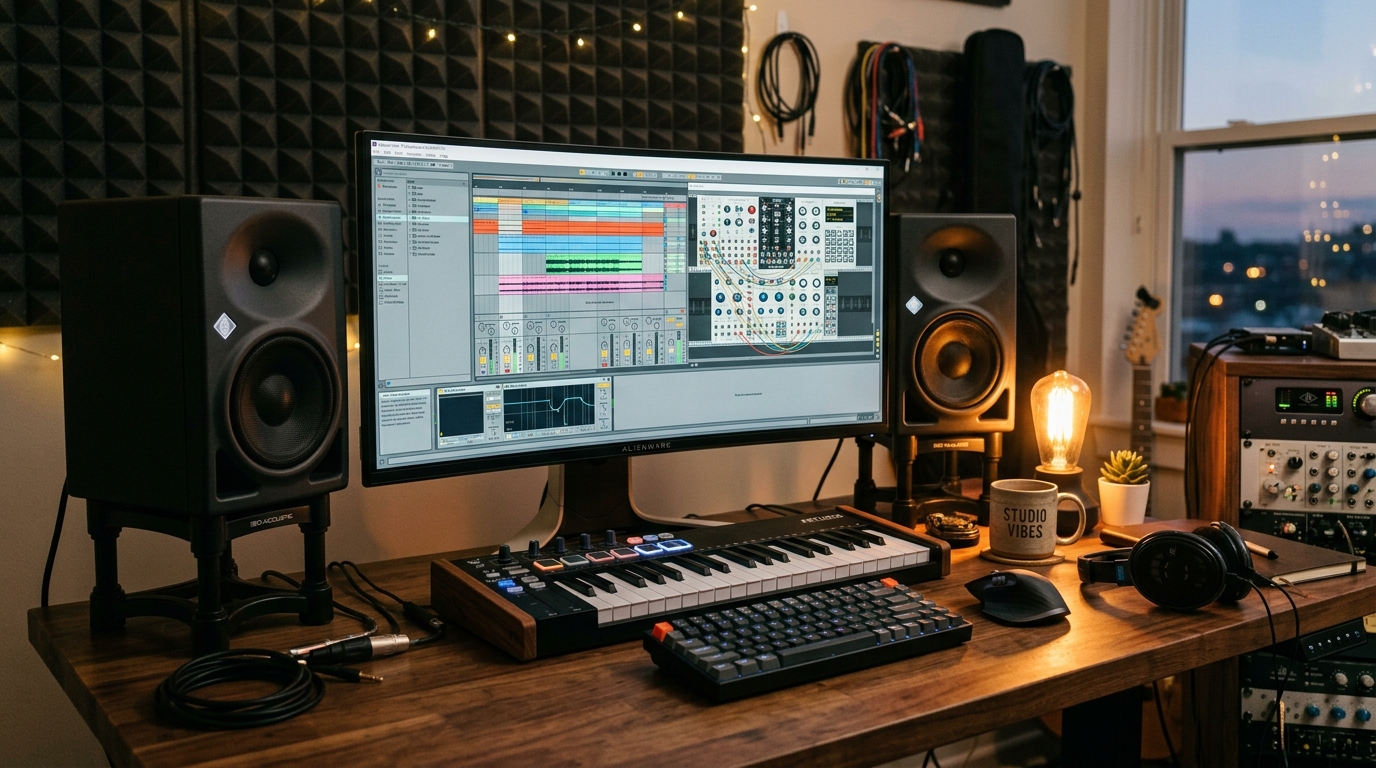
- Modular Studio Workflows: You can connect vocal style-transfer nodes, stem separators, and audio upscalers directly into your Digital Audio Workstation (DAW), turning generative AI into an infinitely flexible modular synth rack.
From generative toys to true creative instruments
As a product designer and UX engineer, watching this transition feels historic. We are moving past the first wave of generative AI, where products were designed as flashy single-prompt novelties. What builders and creators actually demand is granular control, inspectable intermediate states, and tactile creative agency.
A truly great creative tool should never feel like a casino slot machine. It should feel like a fine-tuned instrument—one that respects your creative direction, responds with precision, and gives you the superpower to compose at the speed of thought.